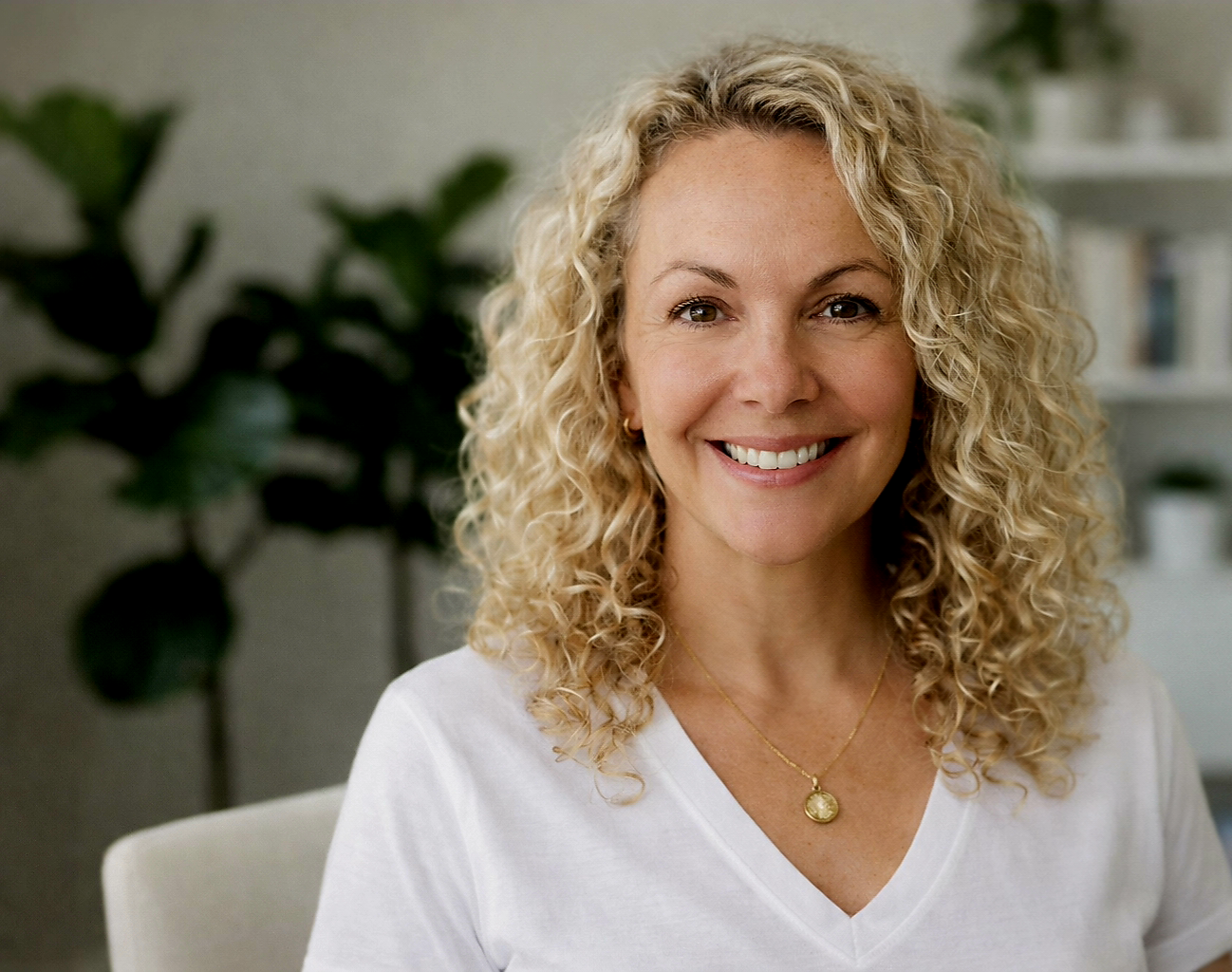
Hi, I’m Jade.
A couple of years ago, I read a description of something called the fawn response, and I sat very still at my kitchen table.
It described a woman who says yes while her stomach drops. A woman who can read any room in seconds and has no idea what she herself wants for dinner. A woman whose voice shakes when she tries to speak up, who keeps the peace at any price, who carries a quiet shame she cannot explain.
I remember thinking: That’s it. That’s exactly what I have.
I had been watching videos by a popular complex trauma creator on YouTube, and his teaching gave me the first language I ever had for my own life.
The years before the name
I was, in my own words, an extreme fawner my entire life. I believed something was wrong with me. I had never heard the term complex trauma. I only knew the symptoms from the inside: the pit in my stomach, the fear of confrontation, the strange emptiness when someone asked a simple question like “What do you prefer?” and I found nothing there. No preferences. No answers. I did not know who I was personally.
Finding the name changed the temperature of everything. A pattern with a name is a pattern you can study. A pattern you can study is a pattern you can practice your way out of.
A practice, built at home
My professional life had been spent elsewhere, as an administrative assistant, an executive assistant, and a master esthetician. This work came to me as a student of my own nervous system.
I searched for a long time. Kundalini yoga helped. Mindfulness meditation and Qi Gong helped. Breathwork helped. Each one gave me something true, and I remain grateful for all of them. Therapy was never the right fit for me, and medication was a road I did not want to take. I kept looking for a personal practice, something I could do myself, in my own home, in the actual moments when the feelings arrived.
Because here is what I believe, and it sits at the center of everything on this site: the work is inside you. Even with the best support in the world, you still face your experiences alone, at the kitchen table, at two in the morning, in the second before you answer. A person needs tools that live in her own hands.
Pause. Reflect. Regulate.
The method on this site grew out of my own late-night process. I had begun talking my feelings through with an AI assistant, and a rhythm emerged on its own. Something would happen and I would pause, body first, before the story took over. Then I would reflect: What am I experiencing? What is actually happening in me right now? The conversation would help me see the pattern underneath, and seeing it would begin to regulate my system and change my perspective on what I was living through.
I built a library of regulation practices and guided audios for myself, and I used them daily. The progression was natural, and at some point a quiet thought arrived and stayed: this worked for me. It could work for other women too.
The Self Coaching Method is that thought, built out. It is a daily personal practice for women who recognize themselves in these pages the way I recognized myself at that kitchen table.
A few true things
I am a mother. I am 54. I am an entrepreneur, and I am someone who has always sought to grow.
I also paint, in watercolor, and painting has helped my fawning immensely. Fawning teaches a woman to hide her preferences, her colors, her mark on the page. Watercolor asks for the opposite. You choose the color. You make the stroke. You let it be seen. You will find painting woven through this site as one of the practices, because expression is medicine for a woman who learned to disappear.
If this is you
If you have spent your life saying yes, never rocking the boat, managing everyone’s feelings while your own went unnamed, I want you to hear this from someone who lived exactly there:
Your nervous system learned a brilliant strategy in a hard season. Strategies can be honored, and they can be updated.
Start with a pause. I will show you the rest.
Pause. Reflect. Regulate.
Jade Dumestre
Founder, The Self Coaching Method
The Self Coaching Method is an educational practice resource created from lived experience. Many readers use these tools alongside therapy and other professional support.